
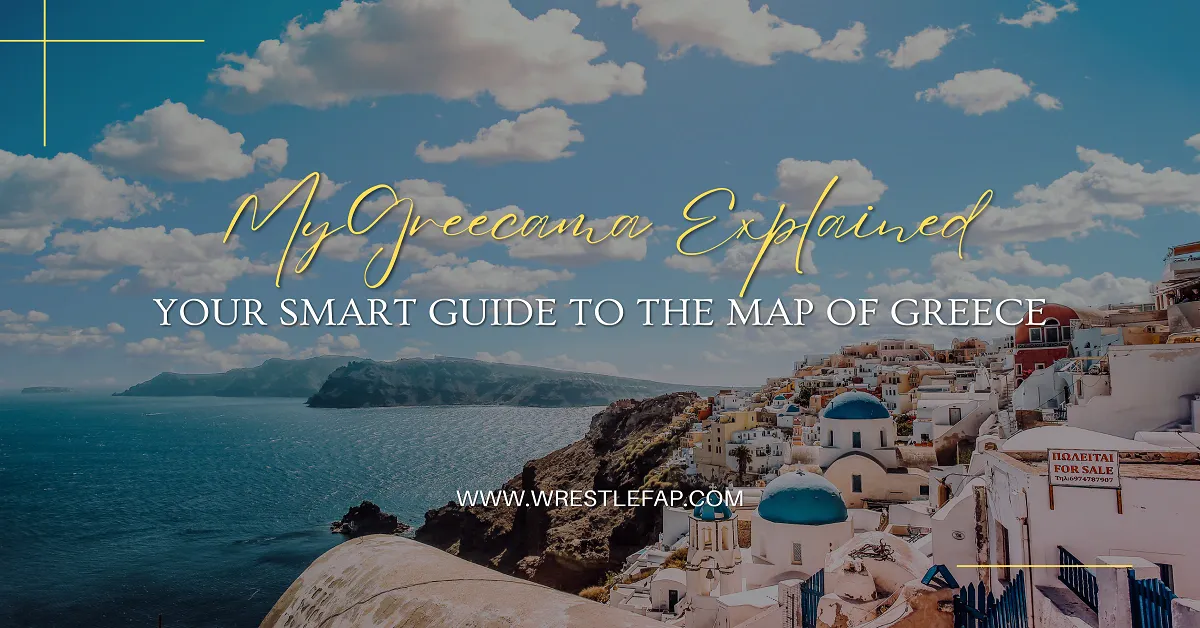
MyGreecama Explained: Your Smart Guide to the Map of Greece
Understanding the geography of a country as historically rich and geographically diverse as Greece can sometimes feel overwhelming. With hundreds of islands, mountainous regions, and ancient cities scattered across the mainland and surrounding seas, navigating the map of Greece requires a clear and structured approach. This is where the concept of mygreecama comes in.
Mygreecama can be thought of as a simplified and smart way to explore the map of Greece—helping travelers, students, and geography enthusiasts understand the country’s layout, major regions, and key destinations more easily.
In this guide, we’ll break down how mygreecama helps explain Greece’s geography and how it can be used as a practical tool for discovering the country’s cities, islands, and cultural landmarks.
Understanding the Geography of Greece
Before diving deeper into mygreecama, it’s important to understand the basic structure of the Greek landscape.
Greece is located in southeastern Europe and consists of three major geographic components:
- The mainland, which includes mountainous regions and historic cities
- The Peloponnese peninsula, connected to the mainland by a narrow isthmus
- Thousands of islands spread across surrounding seas
The country borders several nations, including Albania, North Macedonia, Bulgaria, and Turkey, while its coastline stretches across the Aegean Sea, Ionian Sea, and Mediterranean Sea.
Because of this complex geography, maps of Greece often appear crowded or confusing to newcomers.
What Is MyGreecama?
The keyword mygreecama represents a conceptual approach to exploring the map of Greece in a more intuitive way. Rather than viewing the country as a complicated cluster of islands and regions, mygreecama organizes the geography into clear, easy-to-understand sections.
The idea behind mygreecama is simple:
break down Greece’s geography into recognizable travel and cultural zones.
This approach allows users to quickly understand where major cities, islands, and landmarks are located.
Major Regions Highlighted in the Greece Map
Using the mygreecama approach, the country can be divided into several important regions.
1. Central Greece
Central Greece includes the nation’s capital, Athens, which serves as the political, cultural, and historical center of the country. Nearby landmarks such as the Acropolis of Athens make this region one of the most visited in the world.
2. Northern Greece
Northern Greece includes cities like Thessaloniki, the country’s second-largest urban center. This region is known for its Byzantine history, mountain landscapes, and cultural diversity.
3. The Peloponnese
The Peloponnese peninsula contains many famous ancient sites, including Olympia, the birthplace of the ancient Olympic Games.
4. The Greek Islands
Greece is famous for its islands, many of which are global travel destinations. Some of the most recognized include:
- Santorini
- Mykonos
- Crete
- Rhodes
These islands are scattered across the Aegean and Ionian Seas, forming a vast network that can be difficult to visualize without a structured map.
Why MyGreecama Makes the Greece Map Easier to Understand
The reason mygreecama is useful is that it simplifies a geographically complex country into manageable sections.
Instead of memorizing dozens of islands and regions at once, the concept helps people focus on:
- Major mainland regions
- Important historical cities
- Key island groups
- Natural geographic boundaries
This structure allows travelers and learners to gradually build a mental map of Greece.
How Travelers Can Use MyGreecama
Travelers planning a trip to Greece can use the mygreecama framework to organize their itinerary more effectively.
For example:
- Start in Athens to explore ancient history
- Move to the Peloponnese for archaeological sites
- Visit northern Greece for cultural experiences
- Finish with island destinations such as Santorini or Crete
This approach turns a complicated travel map into a logical journey through the country.
Educational Benefits of the MyGreecama Approach
Students studying European geography can also benefit from the mygreecama method.
It helps them:
- Identify the relationship between mainland Greece and its islands
- Understand historical trade routes across the Aegean Sea
- Learn how geography influenced ancient civilizations
- Recognize the strategic importance of the region
- By organizing information visually and geographically, mygreecama makes learning more intuitive.
Conclusion
Greece’s geography is fascinating but complex, with thousands of islands, historical cities, and diverse landscapes spread across the Mediterranean region. The mygreecama concept offers a smart way to simplify this complexity by organizing the map of Greece into clear, accessible sections.
Whether you’re a traveler planning your next adventure, a student studying geography, or simply someone curious about the country, using the mygreecama approach can make exploring the map of Greece far easier and more engaging.
By focusing on key regions, major cities, and iconic islands, mygreecama transforms the map of Greece from a confusing puzzle into an understandable guide to one of the world’s most historic destinations.